Nutrition
17 premium cattle feed and fodder ingredients — sourced from certified producers, tested batch by batch, and shipped to livestock farms worldwide.
About Pivot Global
Karachi-based traders sourcing certified feed and fodder ingredients on five continents — tested, documented and shipped to your port. Open any of the four below.
Our Range
Every ingredient ships with its own Certificate of Analysis, phytosanitary certificate and full customs documentation. Open a card for its full nutritional profile.
Contact
A competitive quote within 24 hours.
Knowledge Hub
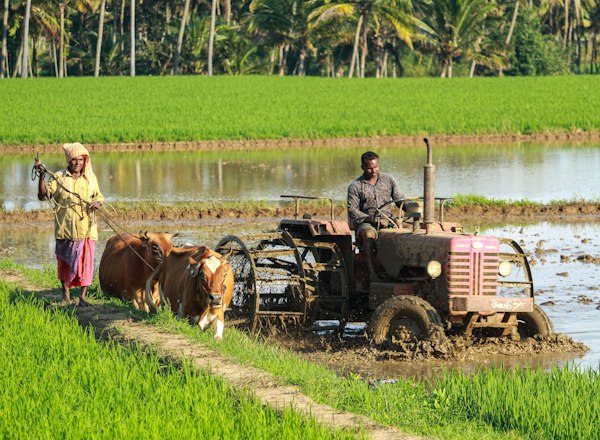
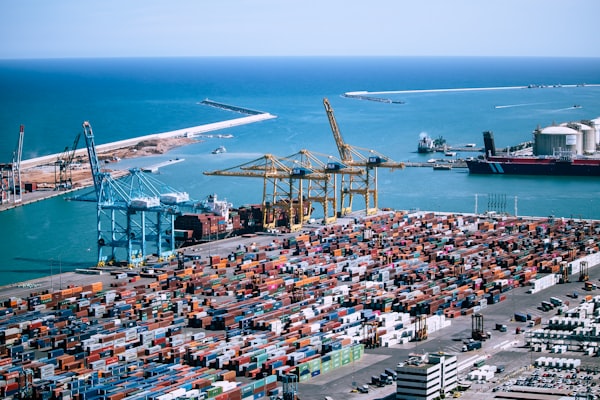
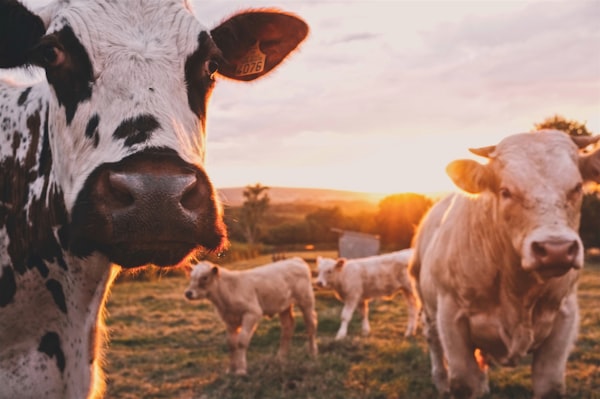

Every dairy and beef operation faces the same equation: hold milk and weight-gain performance while keeping the ration affordable and the supply predictable. Over the last decade, Palm Kernel Meal (PKM) has become one of the most dependable answers to that equation for cattle producers across South Asia, the Middle East and Africa — and Pakistan is now one of its fastest-growing destinations.
PKM is a by-product of palm oil extraction. After palm fruits are pressed for crude palm oil, the remaining kernels are processed — either mechanically (expeller) or with solvent — to recover the residual oil. What is left is Palm Kernel Meal. The expeller variant retains more residual fat (roughly 7–9%) and is the version most feed formulators prefer for ruminants, because that fat carries useful energy.
“Malaysia and Indonesia together account for the large majority of global palm oil production — which makes PKM one of the most consistently available feed ingredients on the international market, year after year.”
PKM typically carries 15–18% crude protein and 14–20% crude fibre, with a metabolisable energy value around 1,700–1,750 kcal/kg for ruminants. Its most useful characteristic is its high NDF (roughly 68%), which makes it an excellent rumen buffer: it slows digestion, stabilises rumen pH and supports healthy fibre fermentation. Its protein also has a meaningful bypass fraction, reaching the small intestine rather than being lost as ammonia in the rumen.
Published feeding trials consistently show that including PKM at 15–25% of a dairy ration maintains milk yield while allowing formulators to reduce reliance on higher-cost protein and energy concentrates.
Pakistan has one of the largest cattle and buffalo populations in the world, and domestic by-product supply — rice bran, wheat bran, oilseed cakes — is already fully absorbed by local demand. Palm kernel meal fills that gap from a region only a short shipping route away. Container transit from Port Klang or Belawan to Karachi is measured in days, not weeks, which keeps freight cost and quality risk low compared with sourcing protein and fibre from the Americas or the Black Sea.
Pivot Global imports PKM from certified Malaysian and Indonesian mills into Pakistan, with a Certificate of Analysis on every shipment. Tell us your target specification and volume and we will structure the shipment around it.
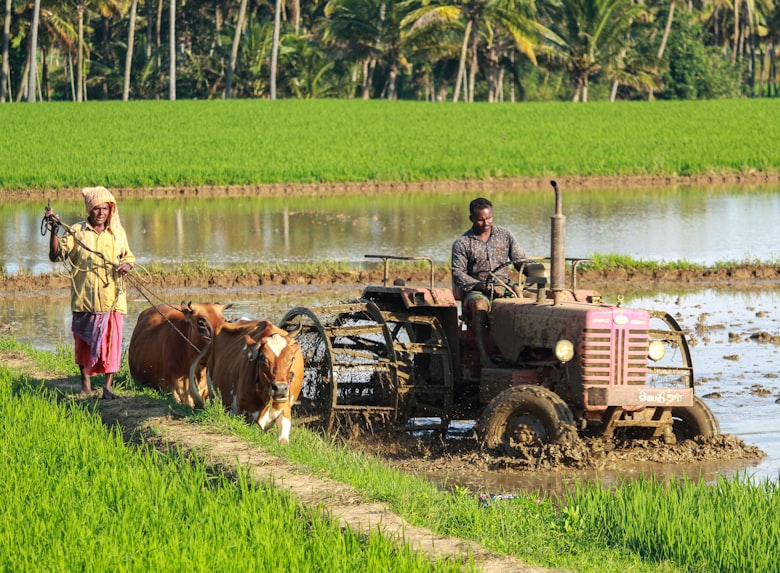
Wheat bran is one of the most widely used ingredients in ruminant feeding worldwide, and one of the most misunderstood. It is produced as a by-product of flour milling, which means its availability follows wheat consumption rather than feed demand — and that single fact shapes both its price behaviour and its trade flows.
Wheat bran typically contains 15–16% crude protein, 9–11% crude fibre and 3–5% fat, with a metabolisable energy value around 2,000–2,100 kcal/kg for ruminants. Its standout feature is phosphorus — roughly 1.17%, the highest of any common cereal by-product. Ruminants unlock that phosphorus through microbial phytase activity in the rumen, which means wheat bran can meaningfully offset mineral supplementation in a ration.
“Wheat bran’s combination of moderate protein, high fibre and excellent palatability makes it one of the most versatile ingredients in ruminant feed formulation.”
Wheat bran is generated wherever wheat is milled at scale, but it is only exported where domestic livestock demand does not consume it. Pakistan is one of the world’s largest wheat-milling countries, and its bran moves steadily into the Gulf and into Bangladesh — both regions with large, intensifying dairy and beef sectors and very limited domestic cereal by-product supply. The short sea route from Karachi to Gulf ports and the established container lanes to Chattogram make the flow efficient in a way that longer-haul origins cannot match.
The practical consequence for a buyer in Dubai, Doha, Riyadh or Dhaka is availability throughout the year rather than seasonal gaps, and transit times measured in days.
Pivot Global exports Pakistani wheat bran to the Middle East and Bangladesh in 50 kg bags, bulk bags or loose bulk containers, with phytosanitary certification and a Certificate of Analysis on every order.
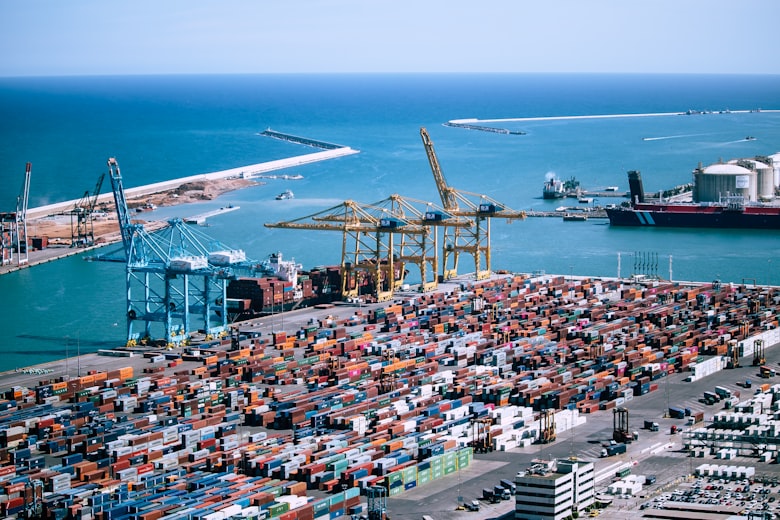
Almost every major cattle feed ingredient is a by-product. Palm kernel meal comes from palm oil. Wheat bran comes from flour. Soybean, canola and cottonseed meal come from vegetable oil. Rice bran comes from rice milling. Nobody plants a field to produce them — they appear because something else was produced first.
That one structural fact explains almost everything about how feed trades globally: where supply exists, why it does not sit next to demand, and why the flows are so stable once they form.
A country generates feed by-products in proportion to what it processes for human consumption, not in proportion to how many cattle it keeps. Malaysia and Indonesia produce enormous volumes of palm kernel meal because they crush palm for oil — not because they have large cattle herds. Pakistan generates large volumes of wheat bran because it mills wheat for flour at national scale.
Livestock density, meanwhile, is driven by something entirely different: population, dietary culture, land availability and dairy tradition. The two maps almost never line up. That mismatch is the entire feed trade.
“Feed ingredients are produced where crops are processed and consumed where animals are concentrated. International trade exists to close the distance between those two maps.”
Feed ingredients are low-value, high-volume goods. Freight is therefore a large share of landed cost, and that constrains geography far more than in most trades. High-protein, high-density meals justify long-haul ocean freight. Bulky, fibrous, lower-density materials generally do not — they trade regionally, within a few days of sailing.
This is why the world’s feed map is really a set of regional basins rather than one global market. Southeast Asian palm by-products serve South Asia and the Gulf. South Asian cereal by-products serve the Gulf and the Bay of Bengal. Black Sea by-products serve the Mediterranean and North Africa. American oilseed meals serve Europe and East Asia. Each basin is held together by short sailing times and established container lanes.
The Gulf states have growing dairy and beef sectors, rising demand for fresh milk, and almost no arable base to generate feed by-products domestically. Every kilogram of fibre and protein in a Gulf ration is imported by design, not by circumstance. That makes the region one of the most reliable demand centres in the world — demand that does not disappear when a harvest is good somewhere else.
Bangladesh presents a related but distinct picture: a very large livestock population, rapidly commercialising dairy, and domestic by-product supply already fully consumed. It imports for volume rather than for the absence of agriculture.
Because feed ingredients are by-products, their availability is set by the economics of the primary product. When palm oil crushing slows, palm kernel meal tightens — regardless of how many cattle need feeding. When wheat milling rises, bran becomes more available even if livestock demand is flat. Add currency movement, export policy, freight rates and container availability, and it becomes clear why feed markets can move sharply without any change in animal numbers.
The practical takeaway for a buyer is to watch the upstream industry, not only the feed market. Palm oil output tells you more about future PKM availability than any feed report will.
Export duties, quotas, biodiesel mandates and phytosanitary rules reshape feed flows faster than any harvest ever does. A biofuel policy that changes how much oilseed is crushed changes how much meal exists. An export restriction imposed to protect domestic food supply removes an origin from the market overnight. Buyers who track policy in their source regions are rarely caught out; buyers who track only price are.
Pivot Global operates at exactly these junctions — importing palm kernel meal from Malaysia and Indonesia into Pakistan, and exporting Pakistani wheat bran into the Middle East and Bangladesh. Both are short-haul flows between a structural surplus and a structural deficit, which is what makes them durable.
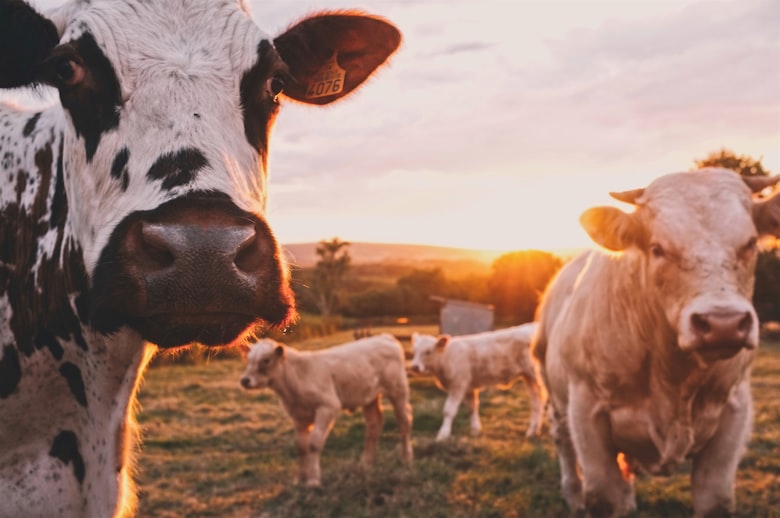
Most discussions of feed ingredients treat them as competitors — which meal has more protein, which one is cheaper per tonne. That framing misses how rations are actually built. A working cattle ration needs several different things at once: fermentable fibre to keep the rumen stable, energy to support production, and protein of the right quality reaching the right part of the digestive tract.
Palm kernel meal, wheat bran and sesame meal are interesting precisely because they do not compete. Each covers a gap the other two leave open, and all three are by-products with reliable, structurally driven supply.
“These three ingredients are not alternatives to one another. Used together, they cover fibre, energy and bypass protein with materials that are available every month of the year.”
PKM carries roughly 15–18% crude protein and 14–20% crude fibre, with a very high NDF of around 68%. That NDF is the point. It slows the rate of fermentation, stabilises rumen pH and gives the rumen mat physical structure — which matters enormously in high-concentrate rations where acidosis is the constant risk.
The expeller variant also retains 7–9% residual fat, so it contributes energy alongside fibre, and a useful share of its protein bypasses the rumen. Its weakness is protein quantity: PKM will never be the protein backbone of a ration.
Role in the ration: fibre buffer and secondary energy source. Typically 15–25% of a dairy ration.
Wheat bran contributes 15–16% crude protein and 9–11% fibre, but its distinguishing feature is phosphorus — around 1.17%, the highest of any common cereal by-product. Ruminants unlock that phosphorus through microbial phytase activity in the rumen, which reduces the need for inorganic mineral supplementation.
It is also one of the most palatable ingredients available, which makes it valuable as a carrier: it encourages intake of a mix that animals might otherwise eat reluctantly. Its fibre is softer and faster-fermenting than PKM’s, so the two are complementary rather than redundant — wheat bran keeps intake up while PKM keeps the rumen steady.
Role in the ration: palatability, phosphorus and bulk fibre. Typically 2–4 kg/head/day for dairy cows, or 10–20% of ration dry matter.
Sesame meal (sesame oil cake) is what remains after sesame seed is pressed for oil. Expeller sesame meal typically carries 35–45% crude protein, placing it firmly in oilseed-meal territory, and it has two properties that make it genuinely distinctive.
The first is methionine. Sesame meal is one of the richest plant sources of methionine available — often the limiting amino acid in dairy rations built on cereal by-products, and directly tied to milk protein synthesis. The second is calcium: sesame meal is unusually high in it for a protein meal, which helps balance a ration where cereal by-products are contributing phosphorus but very little calcium.
Its limitation is lysine, which is moderate rather than high, so it complements rather than fully replaces a lysine-rich meal in intensive dairy rations. Its high fibre and residual oil also mean production date and storage conditions matter.
Role in the ration: protein density, methionine and calcium. Typically 10–15% of concentrate for cattle.
Look at what each one leaves missing and the logic becomes clear:
Together they cover fibre, energy, protein quality and the calcium–phosphorus balance without any single ingredient being asked to do a job it is poorly suited to. A common starting structure for a lactating dairy concentrate is a PKM-and-wheat-bran fibre base with sesame meal carrying the protein load, adjusted to forage quality and yield target.
All three have supply that is set upstream rather than by feed demand. Palm kernel meal follows palm oil crushing in Malaysia and Indonesia. Wheat bran follows flour milling, and Pakistan mills wheat at national scale. Sesame is a significant Pakistani crop, and the meal left after oil extraction represents a real and under-developed export opportunity into markets that are short of protein meals.
Pivot Global imports palm kernel meal into Pakistan from certified Malaysian and Indonesian mills, and exports Pakistani wheat bran and sesame meal into the Middle East and Bangladesh — with a Certificate of Analysis on every shipment. Share your target specification and destination port and we will structure the shipment around it.